
Why Mattresses Fail
The Problem Isn’t Always Soft vs. Firm
When a mattress doesn’t work, the usual response is to blame firmness: too soft, too firm, maybe somewhere in between.
But firmness is only one part of a much larger equation.
Every sleeper brings a different combination of body dimensions, weight distribution, sleep position and pressure points to the mattress. The mattress brings its own combination of materials, layer construction and support characteristics.
How those two interact matters more than a simple firmness label.
That is why the same mattress can feel completely different to two people — and why replacing one highly rated mattress with another doesn’t always solve the problem.

One Mattress. Very Different Bodies.
Mattresses are generally manufactured in standard constructions. Human bodies aren’t.
Consider just a few of the variables that affect how someone interacts with a mattress:
- body weight and how that weight is distributed
- shoulder and hip dimensions
- body shape and proportions
- side, back or stomach sleeping position
- where the body applies the greatest pressure
- how deeply different areas compress the mattress
A broad-shouldered side sleeper, for example, loads a mattress differently than a lighter back sleeper. The same layer of material that compresses appropriately beneath one person may respond very differently beneath another.
Two Sleepers Make the Problem More Complicated
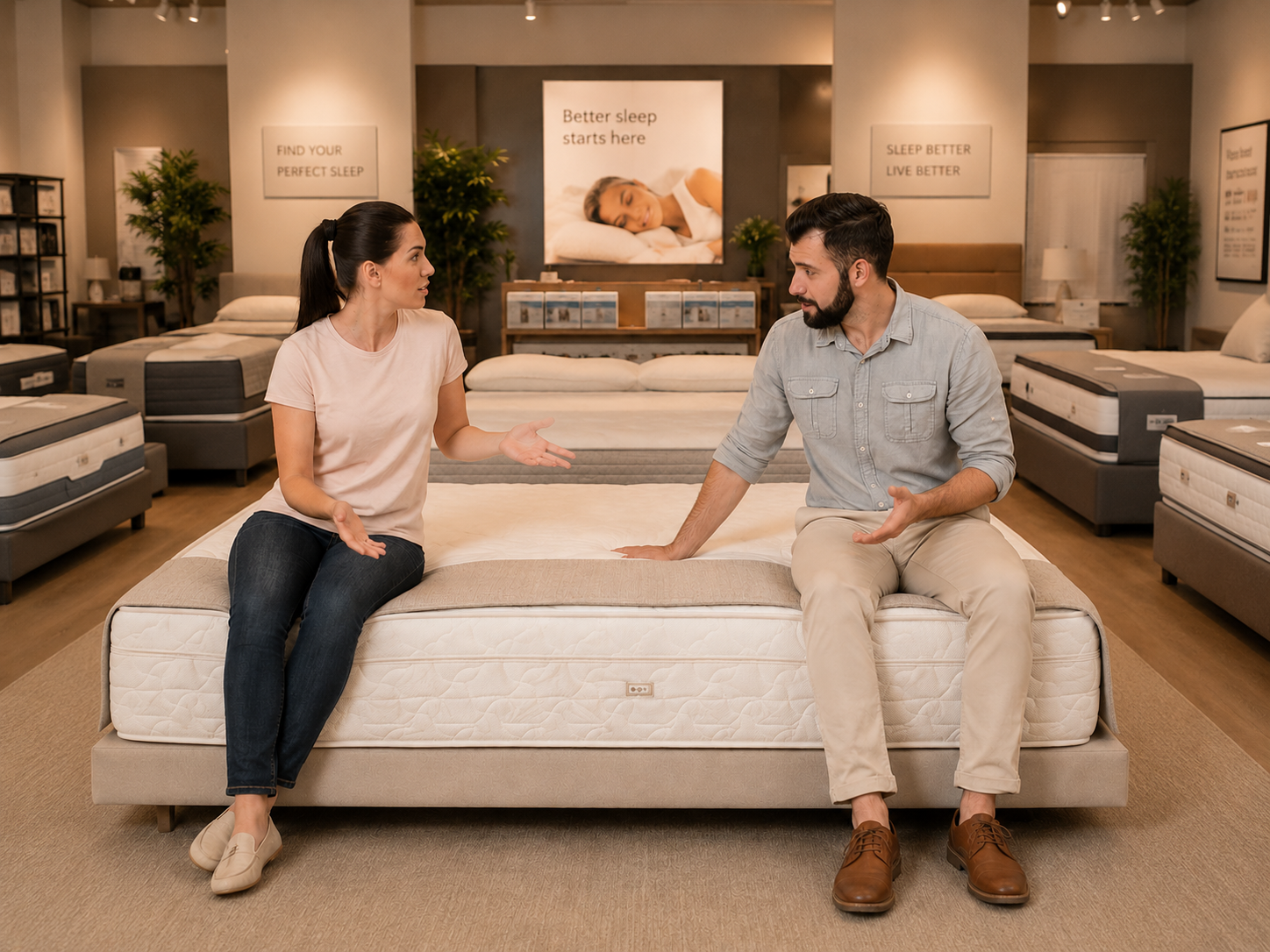
Two people sharing one mattress can have substantially different body dimensions, weights and sleeping positions. Yet most mattresses ask both sleepers to share essentially the same support architecture.
That helps explain a familiar experience: one partner thinks the mattress is comfortable while the other can’t wait to replace it.
The disagreement isn’t necessarily about preference. Their bodies may simply be interacting with the mattress differently.
Why Firmness — and Even Personalization — Only Goes So Far
Soft, medium and firm are useful descriptions of how a mattress feels. They are not measurements of how well that mattress will interact with a particular body.
The same distinction applies to many forms of mattress personalization.
A quiz may ask about sleep position, body weight or comfort preference and then recommend one mattress from a product line. Split firmness can give partners different surface feels. Adjustable bases can change sleeping position.
All can be useful.
But selecting among predetermined choices is different from configuring a sleep architecture around an individual sleeper.
Selection
- Soft / Medium / Firm
- Sleep-position quiz
- Body-weight range
- Preset mattress choices
- General comfort preference
Configuration
- Body dimensions
- Weight distribution
- Sleep position
- Pressure distribution
- Material response
- Sleep architecture
Selection narrows the available choices. Configuration starts with the individual.
What About Premium Mattresses?
A higher-priced mattress may offer sophisticated materials, cooling features, premium fabrics, additional comfort layers or more elaborate construction.
Those features may improve the product. They do not, by themselves, establish that its support architecture is appropriate for your particular body.
The same is true of material categories.
Memory foam, latex, coils and hybrid constructions each respond differently under load. No material is automatically right or wrong for every sleeper. What matters is how the complete construction responds to the person sleeping on it.
Premium materials and premium personalization are therefore not necessarily the same thing as individualized fit.

What Mattress–Body Mismatch Can Feel Like
When the mattress and sleeper don’t interact well, the signs can be easy to misinterpret.
A person might blame age, sleeping position, yesterday’s workout or simply assume that waking up uncomfortable is normal.
Sometimes the sleep surface deserves a closer look.
Why Do I Wake Up With Back Pain After Sleeping?
A mattress may contribute to morning back discomfort when different areas of the body are not supported in a way that allows a comfortable sleeping posture.
For example, the hips may sink substantially more than surrounding areas, or the lumbar region may not receive enough support.
Mattress fit is only one possible contributor to back pain, but when discomfort consistently appears after sleeping or changes significantly with different mattresses, the interaction between the body and sleep surface is worth considering.
Can a Mattress Contribute to Hip or Shoulder Pain?
It can contribute to pressure and discomfort, particularly for side sleepers.
Shoulders and hips create concentrated contact points against the mattress. If these areas cannot settle comfortably into the surface, pressure can build. If they sink disproportionately, body position can also change.
This is why simply moving from a firm mattress to a soft one — or the reverse — doesn’t necessarily resolve the problem.
How the Body Loads the Mattress Matters
Shoulders and hips do not apply pressure evenly across the sleep surface. Body shape, weight distribution and sleeping position all affect how deeply different areas compress the mattress.
That interaction is one reason the same construction can perform very differently for different sleepers.

Why Am I Stiff Even After Eight Hours of Sleep?
Time in bed and quality of physical support are not the same thing.
If you frequently wake feeling stiff, change positions throughout the night or feel noticeably better after getting up and moving, the mattress may be one factor worth evaluating.
The important question is not just how long you slept, but how your body was supported while you slept.
Why Does One Partner Love the Mattress While the Other Hates It?
Because they aren’t putting the same body on it.
Different weights, proportions and sleeping positions create different patterns of compression and pressure. A construction that works well for one sleeper may work poorly for the person beside them.
This is one of the clearest limitations of treating a two-person mattress as though it has only one sleeper.
Why Changing Mattresses Often Repeats the Same Problem
When a mattress is uncomfortable, most people shop differently the next time.
They may move from firm to medium. Foam to hybrid. One brand to another. A basic mattress to a premium model.
The product changes. But the method of choosing it often doesn’t.
If the new mattress is still selected primarily by general categories, reviews, comfort preference or a brief showroom trial, the underlying question remains unanswered:

How will this particular mattress interact with this particular body over an entire night?
That is why repeatedly changing mattresses can become frustrating. A different mattress may produce a different experience without necessarily addressing the reason the previous mattress didn’t work.
A Better Question Than “What Mattress Should I Buy?”
Most mattress shopping begins with questions like:
Should I buy soft, medium or firm?
What is the best mattress for back pain?
Is memory foam, latex or a hybrid better?
Those questions aren’t unreasonable. But they begin with the mattress.
We believe a better place to begin is with the sleeper.
What does this individual’s body require from the sleep architecture beneath it?
That means considering body dimensions, weight distribution, sleep position, pressure distribution, material response and how the different components of the mattress work together.
At Custom Sleep Technology, that is the purpose of the CST Body Profile™: to model characteristics of the individual sleeper and use that information to calculate a sleep architecture configured for that body.
Because the goal isn’t simply to choose a mattress that feels personalized.
It’s to make personalization more precise.
Ready to See What Your Body Profile Suggests?
Start the CST Body Profile™ to see how your body dimensions, weight distribution and sleep position can be used to calculate a more individualized sleep architecture.